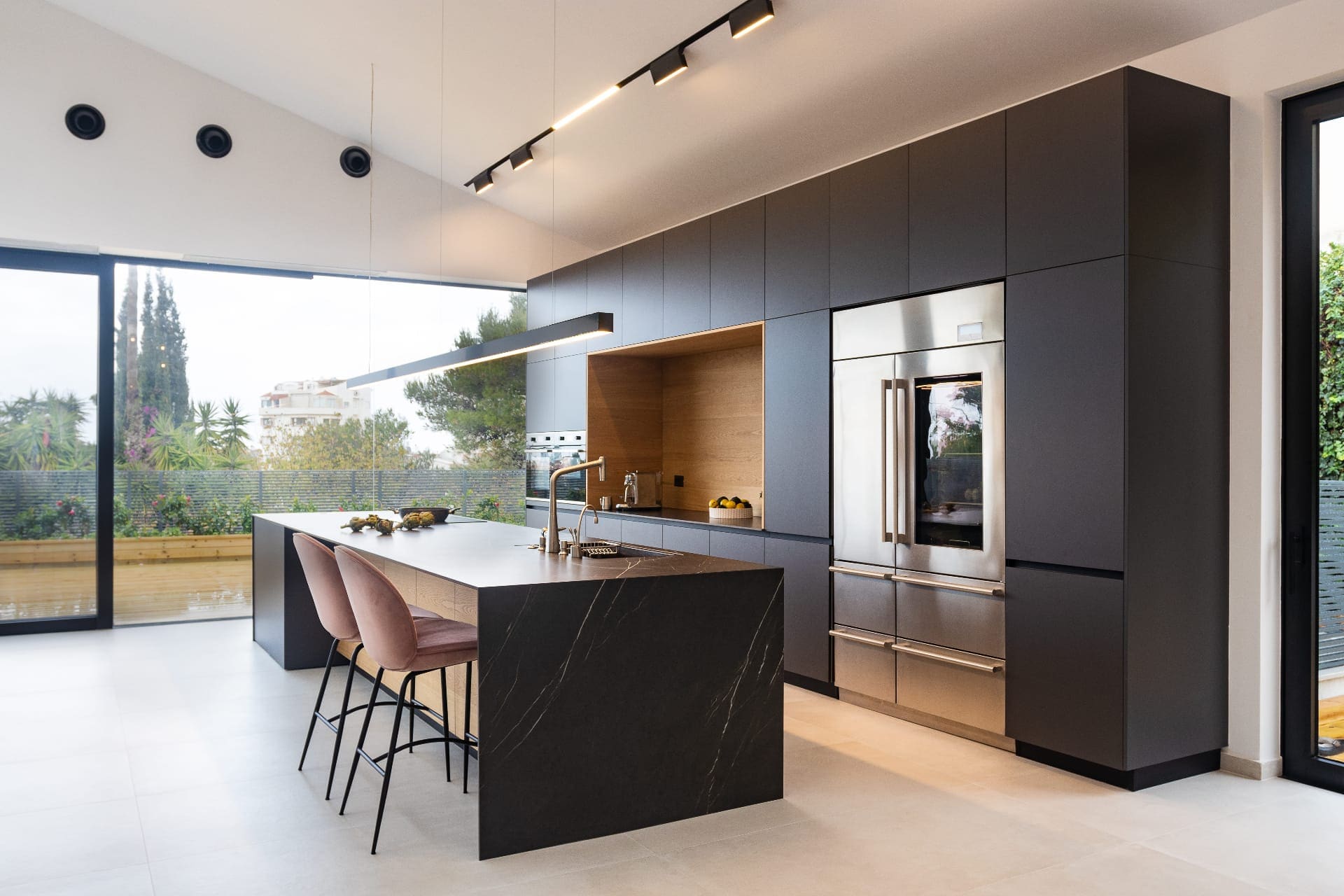
Quartz is an engineered, non-porous surface that never needs sealing and resists stains, while granite is a natural stone with unique veining that needs periodic sealing; for most Philadelphia kitchens, quartz is the lower-maintenance choice, while granite appeals to those who want a one-of-a-kind natural slab. Both are durable, both add value, and both look great when installed well. The right choice depends on how you cook, how you clean, and what aesthetic you're after.
Quartz vs. Granite: Side-by-Side Comparison
| Feature | Quartz | Granite |
|---|---|---|
| Durability | Very hard and resistant to chips and cracks; engineered for uniform strength | Very hard natural stone; slightly more brittle at edges and seams |
| Maintenance | No sealing required; soap and water cleaning | Needs sealing every 1–2 years; mild cleaner recommended |
| Heat Resistance | Moderate; use trivets for hot pots (resin can discolor above 300°F) | Excellent; can handle hot pans directly (though trivets still advised) |
| Stain Resistance | Excellent; non-porous resists wine, oil, and acid | Good when sealed; porous if neglected — oil and wine can stain |
| Cost (installed) | $60–$100 per sq ft typical; premium lines run higher | $50–$100 per sq ft typical; rare slabs and exotics run higher |
| Look | Consistent color and pattern; wide range of modern designs | Unique, one-of-a-kind veining and movement; no two slabs alike |
| Best For | Busy households, low-maintenance preference, modern kitchens | Purists who want natural stone, traditional or rustic aesthetics |
The bottom line from this table: quartz wins on maintenance and stain resistance; granite wins on heat tolerance and uniqueness. For a typical Philadelphia family kitchen that sees daily use, quartz's no-seal, stain-proof surface usually makes more sense.
What Quartz Actually Is (and Isn't)
Quartz countertops are engineered stone — roughly 90–95% ground natural quartz minerals bound together with polymer resins and pigments. The result is a hard, non-porous surface that looks like stone but behaves more like a solid surface in terms of maintenance.
What quartz does well: No sealing, ever — the resin binder makes it inherently non-porous Consistent color and pattern — what you see in the sample is what you get Wide design range — manufacturers like Cambria, Caesarstone, and Silestone offer everything from concrete-look greys to marble-look veining Stronger flexural strength than granite, meaning slightly better resistance to cracking under stress
Where quartz has limits: Heat — place a 450°F pan directly on quartz and you risk resin discoloration. Trivets are non-negotiable. UV exposure — direct, prolonged sunlight can cause color shift over years. Not a major issue for most Philadelphia kitchens, but relevant for sun-drenched spaces. Outdoor use — not recommended. The resin binder breaks down with freeze-thaw and UV.
In Philadelphia and Main Line kitchens — where space is often tight, cooking is frequent, and low maintenance is a priority — quartz is the material we recommend most often.
What Granite Actually Is (and Isn't)
Granite is a 100% natural igneous stone quarried from mountainsides, cut into slabs, and polished. What you see in a slab is exactly what formed in the earth over millions of years — no two pieces are identical.
What granite does well: Heat tolerance — you can set a hot pan down briefly without damage (though repeated thermal shock can crack any stone) Unique aesthetics — the veining, flecks, and movement in a granite slab can't be replicated High-end perception — in luxury Main Line homes, natural stone still carries cachet Longevity — a well-maintained granite counter lasts decades
Where granite needs more attention: Sealing — most granite needs resealing every 1–2 years. The test: drop water on the surface. If it beads, the seal is good. If it absorbs, it's time to reseal. Stain risk — oils, wine, and acidic foods can penetrate if the seal has worn Variability — the slab you approve in the warehouse may look different from the sample you saw in the showroom. Always pick your actual slab.
Granite is the right choice for homeowners who love natural materials, don't mind a small annual maintenance task, and want a kitchen that no one else has.
How Much Do Quartz and Granite Cost in Philadelphia?
Installed pricing in the Philadelphia metro area typically falls in these ranges:
Quartz: $60–$100 per square foot installed for most lines. Entry-level quartz starts around $55/sq ft; premium designer lines with large-format veining can reach $120–$140/sq ft. For a typical Philadelphia kitchen with 45–55 square feet of countertop, that translates to roughly $3,000–$6,000 for the material and fabrication.
Granite: $50–$100 per square foot installed for standard domestic and imported stones. Basic granites (Uba Tuba, Santa Cecilia) sit at the lower end; exotic or rare stones (Blue Bahia, Labradorite, high-end whites) can exceed $150/sq ft. A 45–55 sq ft kitchen runs roughly $2,500–$5,500 for most granites.
What drives the installed price: slab cost is only part of the number. Fabrication (cutting, edge profiling, sink and cooktop cutouts), templating, delivery, and installation make up 40–50% of the total. A complex edge detail like an ogee or waterfall end adds labor. A simple eased edge keeps costs down.
Our advice: Don't choose based on a $5/sq ft difference. Choose based on which material fits your lifestyle. Both are excellent investments when installed properly.
How to Choose Based on Your Lifestyle
Use these scenarios as a guide:
Choose quartz if: You cook daily and want a surface you can wipe down without worrying about stains or sealers You have young kids or a busy household where spills happen fast You prefer a clean, consistent look without dramatic variation You want a modern or transitional aesthetic Maintenance tasks are not something you want on your calendar
Choose granite if: You love the idea of a one-of-a-kind natural surface You don't mind resealing once a year You want the best heat tolerance for heavy cooking Your kitchen design leans traditional, rustic, or old-world You're matching an existing natural stone element in the home
Either works if: You're remodeling for resale and want broad appeal — both are seen as premium by buyers You have a trusted fabricator who installs both materials well (installation quality matters more than the material itself) Your budget lands in the same range for both
Quartzite and Marble: Premium Alternatives Worth Knowing
If you're considering granite, you should also know about quartzite — a natural metamorphic stone that looks like marble but behaves more like granite.
Quartzite is harder than granite, more heat-resistant than quartz, and has the soft, flowing veining that marble lovers want. It does need sealing, like granite. In the Philadelphia market, quartzite typically runs $80–$150/sq ft installed. It's the choice for homeowners who want marble's beauty with better durability.
Marble (Calacatta, Carrara, Statuario) is the classic luxury choice but requires the most care. It's porous, etches with acid, and stains more easily than either quartz or granite. Sealing helps, but marble is a material for homeowners who accept patina as part of the character. Installed marble runs $70–$140/sq ft depending on the slab.
At Icon Remodeling, we source quartz, granite, quartzite, and marble through local Philadelphia-area slab yards and fabricate in-house for a precise fit. We'll walk you through actual slabs, not just samples, so you can see exactly what you're choosing.
Frequently Asked Questions
Does quartz need to be sealed? No. Quartz is non-porous and does not require sealing. This is one of its biggest advantages over both granite and marble.
Can you put a hot pan on granite? Briefly, yes — granite handles heat better than quartz. But repeated thermal shock or extreme temperature swings can crack any stone. Trivets are still the safest practice.
Is quartz cheaper than granite? In the Philadelphia market, they're roughly comparable. Entry-level granite can be slightly cheaper; mid-tier quartz and granite often overlap at $60–$90/sq ft installed. Exotic granites and premium quartz lines both push higher.
Which adds more resale value? Both are seen as premium by buyers. In the Philadelphia and Main Line market, a quality countertop of either material adds appeal. The bigger resale factor is overall kitchen quality — cabinetry, layout, and finish level — not the specific stone choice.
Still Deciding? See the Materials in Person
The best way to choose between quartz and granite is to see full slabs in natural light, next to your cabinet samples and tile choices. A 4-inch sample doesn't tell the whole story.
Icon Remodeling offers countertop selection as part of our [custom cabinetry and countertop service](/services#countertops). We serve Philadelphia neighborhoods and Main Line communities including Bryn Mawr, Villanova, Wayne, Ardmore, and Haverford.
For a sense of overall project costs, read our [Philadelphia kitchen remodel cost guide](/blog/kitchen-remodel-cost-philadelphia-2025). When you're ready to see materials and get an itemized quote, [request a free estimate](/free-estimate) or call (215) 918-8010.